Straight talk on postpartum health from someone people already ask
Published: 22 July 2026 | Posted by Admin | Category: Women's Health, Postpartum Recovery
You had the baby.
Everyone said congratulations. The family came. The pictures were taken. The celebration happened.
And then… everyone went home.
And you were left there. Alone with a tiny human who needed everything from you. Every hour. Every minute. Every second.
Why didn't anyone tell me it was going to be like this?
The bleeding that hasn't stopped. You check the pad again and again. Red. Still red. You Google it at 2am and find things that terrify you. You close the tab. You try to sleep. You can't.
The breastfeeding. Oh God, the breastfeeding.
You tried every position you found on YouTube. You adjusted your arm, your angle, your posture. You watched video after video. And still — your baby cries at the breast like you are offering them nothing. Like your body has completely failed its most basic job.
What is wrong with me? Why won't it work?
Your mother-in-law is in the next room. She has opinions. Many of them. She tells you to drink pap. She tells you to relax. She tells you what she did in her time. You smile. You nod. And then you go to the bathroom and cry quietly so nobody hears you.
Your husband tries. You can see him trying. But he doesn't understand. He cannot understand. He sleeps — full nights of sleep — while you are up at 1am. And 3am. And 5am. And when the sun comes up, you haven't slept at all and you have to start the whole day again.
Is this supposed to be this hard? Am I the only one struggling?
You joined a Facebook mothers group because you thought — maybe someone there will understand. But the group is full of conflicting advice. One woman says do this. Another says never do that. Someone posts a success story and you feel worse, not better. You leave the group three days later.
You called the hospital. The nurse was kind but busy. She said "it's normal, it will pass." She gave you three minutes. You had been suffering for three weeks.
And the emotions. Nobody warned you about the emotions.
The way you can cry without any reason. The way your baby's cry — the cry you waited nine months to hear — has started to feel like it is unravelling something inside you. The way you look in the mirror some mornings and don't quite recognise the woman looking back.
I just want my life back. I just want to feel like myself again. Is that so wrong?
You love your baby. With everything you have. Nobody needs to question that. But you are disappearing — quietly, slowly, without anyone noticing. And you don't know how to ask for help in a way that people will actually hear.
Drop everything you are doing right now and listen to every word I'm about to say.
Our grandmothers knew something that modern medicine forgot to write down.
They knew that a woman who has just delivered a baby is not simply "recovering." She is rebuilding herself — from the inside out, layer by layer, cell by cell. And they knew exactly what that rebuilding required. The warm foods. The rest. The specific practices for healing the body and restoring the milk and holding the emotions together when everything feels like it is falling apart.
That knowledge existed. It was passed down — quietly, privately, from woman to woman — for generations. Until life got busy and hospitals got crowded and everyone started Googling at 2am instead of sitting with the grandmother who actually knew.
Hi. My name is Phaybay.
I am an African woman. A mother. A pharmaceutical microbiologist. Someone who has sat with mothers — in hospitals, in living rooms, in late-night WhatsApp conversations — and heard the same story told in a hundred different voices. And someone who found the complete picture that nobody had ever given me — and put it all in one place for you.
Let me tell you about my friend Glory.
Glory is one of those women you look at and think — she has it together. She always has it together. Smart, put-together, the kind of woman who makes everything look effortless. She had been living in the UK for six years. Good job. Loving husband — Emmanuel. And then, two years ago, their daughter arrived.
And everything fell apart.
How it started.
The birth itself was fine. Long — seventeen hours of labour — but the baby came out healthy, and Glory held her for the first time and cried the good kind of tears.
But then the hospital sent her home.
And reality hit her the way it hits every postpartum mother who wasn't prepared — like a wall of water.
The bleeding didn't stop the way she expected. It changed colour — red to pink to brown — but it kept coming, and she didn't know if this was normal or if something was wrong. She was afraid to call the midwife. She didn't want to seem dramatic.
The breastfeeding was a disaster from day one.
Her daughter would latch for a few minutes and then pull away screaming. Glory assumed it was the position. She watched YouTube tutorials. She tried the cradle hold, the cross-cradle hold, the football hold. She adjusted seventeen times during each feed. The baby still screamed. Her nipples cracked. She cried during feeds. The baby cried during feeds. It was a chorus of suffering that lasted for hours every day.
And then Emmanuel's mother arrived from Nigeria.
She meant well. She truly did. But she had opinions about everything. She told Glory to drink pap three times a day. Glory drank pap. The milk didn't improve. She implied — without quite saying it — that Glory's body was failing.
Maybe she's right. Maybe I'm failing. Maybe I'm not built for this.
The emotional cost.
Emmanuel didn't know what to do. He watched his wife cry. He brought her water. He said "it will get better" more times than she could count. And she knew he meant it. But every time he said it, she felt more alone — because "it will get better" is not the same thing as someone actually helping you make it better.
He started staying at work later. Not to escape, she thinks — just because home had become heavy. And she understood. But it still hurt.
He doesn't even want to come home anymore. I'm doing this alone. I'm completely alone.
She joined a Facebook group for African mothers in the UK. It was full of advice — contradictory, overwhelming, mostly from people who had forgotten how hard the early weeks actually were. She left after four days.
She called the hospital. The midwife said "it's normal." She called again two weeks later. A different midwife said "it's normal." She stopped calling.
The breaking point.
One Sunday afternoon. Emmanuel's mother made a comment — again — about the baby's weight. And something in Glory just… broke.
She put the baby down. Walked to the bedroom. Locked the door. And sat on the floor and cried in a way she hadn't cried since she was a child. Not quiet tears. Real crying. The kind that comes from somewhere deep and doesn't stop when you want it to.
Emmanuel knocked on the door twenty minutes later. "Glory. Please. Open the door."
She opened it. He sat down on the floor with her. And for the first time since the baby came, she told him the truth. All of it. The fear about the bleeding. The shame about the breastfeeding. The feeling of invisibility. The exhaustion that sleep couldn't touch.
He held her. He didn't say "it will get better." For once, he just held her.
And her auntie Ngozi — who had been staying with them that week — knocked quietly and sat down on the bed and said something Glory has never forgotten:
"My daughter. You are not broken. You are just not being held properly. Every woman who has given birth needs to be held — by information, by community, by the right knowledge. Our grandmothers were held like that. You have been trying to recover without being held. That is why you are struggling."
Everything she tried — and why nothing worked.
1. YouTube breastfeeding tutorials. She watched dozens. She tried every position they showed her. The problem was that none of those videos explained what was actually happening hormonally. They were showing her mechanics — arm angle, body posture — without explaining that the reason her milk wasn't letting down had nothing to do with the position of her arm. It had everything to do with what cortisol was doing to her oxytocin. She didn't know that yet.
2. Hospital nurses. Kind. Busy. Two minutes each. "It's normal." "Keep trying." "Drink more water." Nobody sat with her and explained the anxiety-milk connection. She left every appointment feeling more dismissed than when she arrived.
3. Pap — morning, afternoon, evening. Her mother swore by it. Her mother-in-law swore by it. She drank it faithfully for two weeks. It helped with hydration. But nobody told her which specific foods actually support prolactin production, or what to eat alongside her iron-rich vegetables to maximise absorption. Pap alone was not enough.
4. Facebook mothers groups. Overwhelming. Contradictory. Full of opinions, short on evidence. She left.
5. General Google searching. Every result was for Western women in a Western healthcare context. Nobody talked about affordable Nigerian and African foods that support milk production. Nobody spoke to her — an African woman in the diaspora — specifically. She felt invisible.
The chance encounter.
Four weeks after delivery, Glory went to a family gathering in South London. She almost didn't go. But Emmanuel convinced her — "just come for an hour. Get out of the house."
At that gathering was a woman named Adaeze — a scientist with decades of clinical experience, a mother of her own children, and someone who had spent her career watching the same patterns repeat in postpartum women: suffering caused not by weakness, but by the absence of the right information.
Glory ended up sitting next to her at dinner. Something about Adaeze's presence — the particular warmth of a woman who has seen enough of life to speak directly — made Glory open up in a way she hadn't with anyone else.
She told her everything. The bleeding. The breastfeeding. The sleep. The emotions. The mother-in-law. The feeling of disappearing.
Adaeze listened to every word. And then she said:
"Everything you have described has a clinical explanation. Everything you have tried has failed because you were given mechanical solutions for a hormonal problem. Your milk is not flowing because your cortisol is too high and your oxytocin cannot do its job. Your exhaustion is not just about sleep — your iron levels have dropped significantly and nobody has told you which foods will rebuild them fastest. Your emotions are not a weakness — they are the direct result of one of the most dramatic hormonal shifts the female body ever experiences, happening without any support system that truly understands it. You are not broken. You are just unequipped. And I can help with that."
Glory stared at her. "Is it too late?"
"It is never too late. But let's start tonight."
The method.
Adaeze gave Glory a complete, structured, 12-week postpartum recovery system — not a collection of tips, not a YouTube playlist, but a full system covering physical healing, breastfeeding mastery, emotional restoration, nutrition, and the specific cultural reality of an African woman navigating all of this.
Glory held it and said: "This seems almost too simple."
Adaeze smiled. "Simple is not the same as easy. But your body already knows what to do. We are just going to stop blocking it and start supporting it."
The first few days.
Day one — nothing dramatic. She followed the nutrition protocol, tried the 5-minute anxiety-reduction routine before her morning feed, did the pelvic floor exercises, drank warm water, ate specific foods from the meal plan.
Day two — still nothing obvious. She almost stopped. Same thing as everything else. Doesn't work for me.
Day three — she noticed she slept a little better. Not full sleep. But the quality of the fragments felt different. Deeper, somehow.
Day five — something shifted during a morning feed. She had done the 5-minute calm routine beforehand. She had warmed her breast with a cloth. She had breathed — four counts in, seven hold, eight out — and then she latched her daughter.
And she felt it. The tingling. The release. The let-down she had read about but never actually felt — not like this. Her daughter fed quietly for fifteen minutes without pulling away once.
Glory sat very still. Afraid to move. Afraid to break whatever had just happened. And then she cried — but not the desperate crying of the bathroom floor. Something else. Something that felt like relief arriving at a place that had been waiting for it for a very long time.
By day 8, the change was undeniable. Milk flowing consistently. Baby feeding and settling. Bleeding progressing exactly as described. Energy returning — slowly, but visibly.
Emmanuel noticed.
He came home on day nine and stopped in the doorway. Glory was on the sofa. The baby was feeding calmly. She looked up and smiled at him.
"Glory… what happened to you? You look like you again."
She laughed. Properly laughed. For the first time in months.
He picked up the guide from the table, flipped through a few pages, and shook his head slowly. "This must be magic," he said. "Because I don't know what else to call it."
Others had results too.
One mother — six weeks post-caesarean, struggling with wound pain and exhaustion — followed the caesarean-specific recovery protocol. By end of week two: "I was moving without that constant dragging pain."
Another — told by three people that her supply was simply too low and she should switch to formula — started the power pumping protocol and the lactation food plan. Three weeks later: "My baby is exclusively breastfed. I finally understood what had been blocking the milk — and I fixed it."
Word spread. The way it always does among African women when something actually works — quietly, through trusted channels, person to person.
Until the requests got so many that Glory couldn't manage them individually anymore. Which is where this guide comes in.
I get messages every week. From mothers in Lagos. From mothers in London. From mothers in Accra, Nairobi, Houston, and Toronto. All asking: "Can you share what Glory used?"
I can only explain so much in a WhatsApp message. So we did the next best thing.
Everything — the complete recovery system, the 6-week meal plan, the breastfeeding protocol, the emotional restoration tools, the wound healing guidance, the cultural navigation scripts, and the warning signs that demand a doctor visit — is now inside one simple, complete guide.
Introducing…
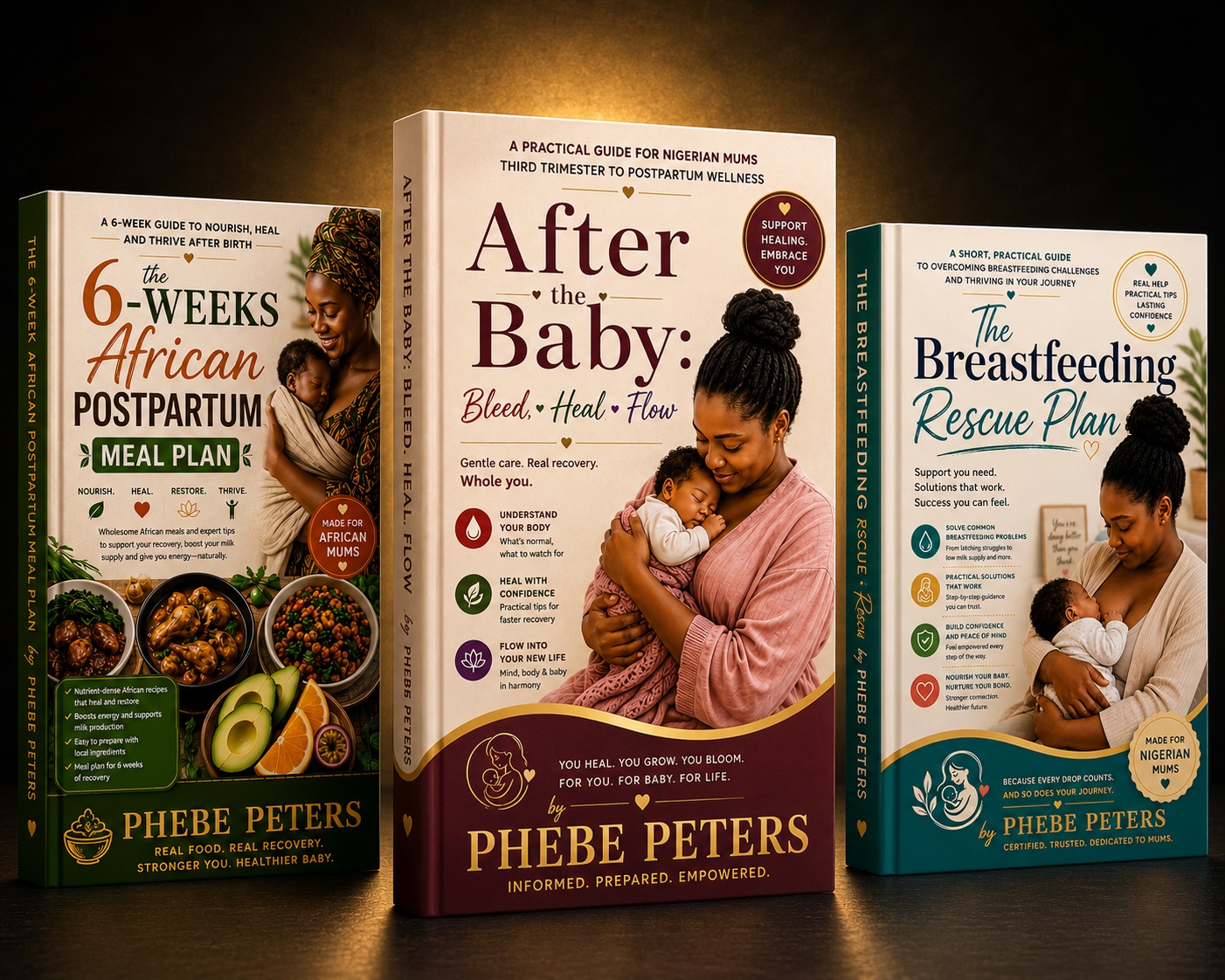
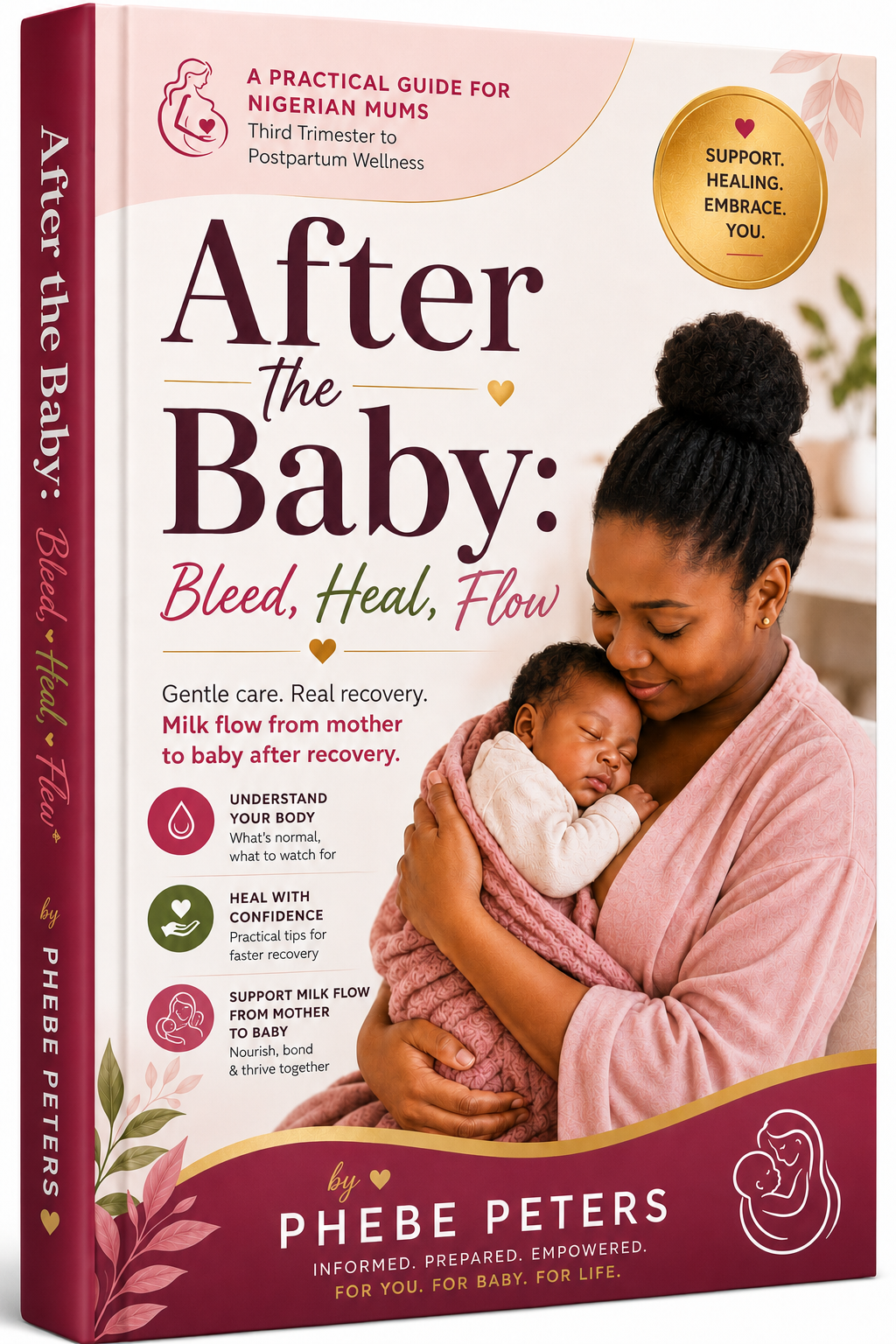
"After The Baby: Bleed, Heal, Flow"
Your Complete 12-Week Postpartum Recovery Guide — For Every African Mother Who Deserves More Than "Just Rest"
This is the same complete system that changed Glory's postpartum experience — and has since reached African mothers across Nigeria, Ghana, Cameroon, Kenya, the UK, and beyond.
Already know this is exactly what you need? No need to keep reading.
👉 I Want This — Take Me There Now🔒 Secure Payment | Instant Download | 30-Day Money Back Guarantee
"When your baby suckles, your body releases oxytocin — the hormone responsible for milk let-down. Oxytocin is directly suppressed by cortisol and adrenaline — the hormones your body produces when you are stressed or anxious. This means that the anxiety of worrying about not producing milk is the very thing suppressing the milk you are trying to produce. This is not a personal failure. This is your body's stress response system doing exactly what it was designed to do."
— After The Baby: Bleed, Heal, Flow, Section 3: The Anxiety-Milk Flow Connection"By the end of week 6 postpartum, your lochia should have stopped or reduced to minimal spotting. If you are still experiencing significant bleeding at 6 weeks, this is not normal and requires medical evaluation. Do not wait and hope it resolves. Seek help. If you are soaking more than one full maternity pad per hour for two consecutive hours at any point in your recovery — this requires same-day medical attention. Do not manage this at home."
— After The Baby: Bleed, Heal, Flow, Section 2: The Bleeding Timeline"Your body requires approximately 500 additional calories per day while breastfeeding. This is not a time for dietary restriction. A mother who under-eats in the postpartum period compromises her milk supply, slows wound healing, worsens postpartum anaemia, and deepens postpartum fatigue. Here is a sample day from Week 1 of the meal plan — built entirely around foods available in any Nigerian market:"
— After The Baby: Bleed, Heal, Flow, Section 8: Your 6-Week African Postpartum Meal Plan| Meal | What To Eat | Why It Helps |
|---|---|---|
| On waking | Two large glasses of warm water + warm ginger tea with honey | Rehydrates after night feeds; ginger supports uterine recovery |
| Breakfast | Oat pap with groundnut paste and honey + two soft-boiled eggs | Oats support milk production; eggs provide complete protein for tissue repair |
| Mid-morning snack | A handful of dates and groundnuts + warm pap with milk | Dates provide iron and energy; groundnuts add healthy fat for milk production |
| Lunch | Pepper soup — goat meat or catfish — with yam + ugwu cooked into the soup | Pepper soup provides protein, lactation-supporting spices, and hydration; ugwu adds iron and calcium |
| Afternoon snack | One ripe banana or two pieces of guava + warm ginger and fenugreek tea | Vitamin C enhances iron absorption from lunch; fenugreek directly supports prolactin production |
| Dinner | Egusi soup with stockfish and crayfish + pounded yam or soft fufu | Egusi provides protein, zinc, and iron; stockfish and crayfish add calcium |
| Before bed | Warm milk with honey + a handful of dates | Warm milk supports sleep quality; dates provide iron and natural energy overnight |
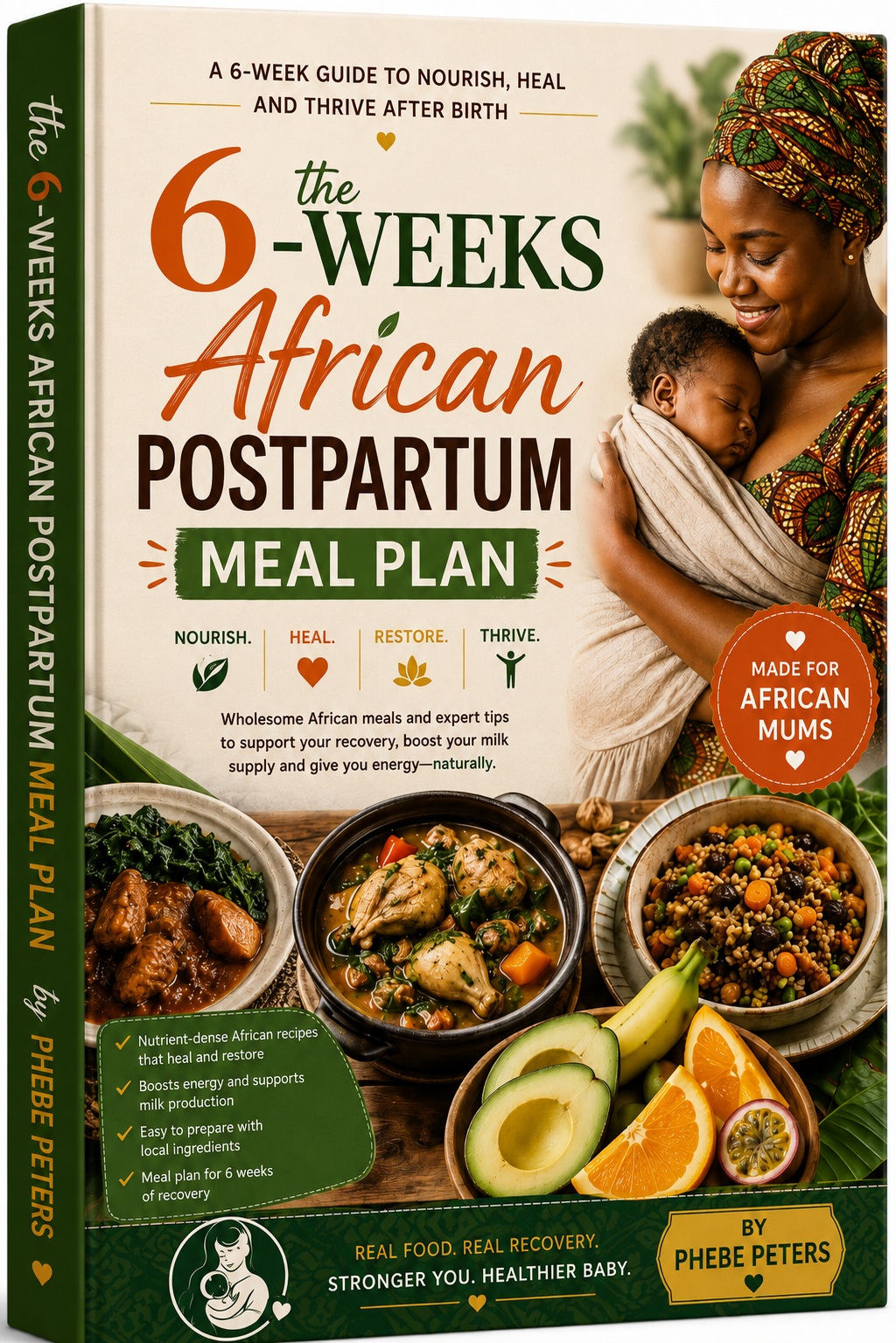
The full guide contains a complete 6-week plan — covering all three phases of recovery — with specific notes on which foods to pair together, which to avoid at the same meal, and which traditional Nigerian cooking methods maximise nutritional benefit.
"The strongest thing you can do in the postpartum period is to accurately assess what your body needs and advocate for it — even when the culture around you is telling you to do otherwise. That is not weakness dressed up as strength. That is genuine strength — the kind that produces a healthy mother, a well-fed baby, and a recovered woman on the other side of 12 weeks."
— After The Baby: Bleed, Heal, Flow, Section 5: Why Cultural Pressure Works Against Recovery"You are not just a mother now. You are still you. The woman who comes through twelve weeks of deliberate, informed, supported postpartum recovery — who has understood her body, advocated for her needs, and refused to disappear into her role at the expense of her self — that woman is not diminished by what she has been through. She is expanded by it."
— After The Baby: Bleed, Heal, Flow, Section 16: Closing LetterWe welcome honest feedback from readers. Your initials and country only — no full names required.
This is not a PDF downloaded from Google and repackaged with a pretty cover. This is original, clinically grounded work. And it cost real money to produce.
The total investment in producing this guide was over ₦58,500.
I am not going to charge you ₦58,500.
I am not going to charge you ₦30,000.
Not even ₦20,000. Not even ₦15,000.
A fair price for everything inside this guide is ₦9,800. And that is exactly what I'm charging — because I want this in the hands of every African mother who needs it.
Ghana: GHS 80 | Cameroon: CFA 9,000 | Kenya: KES 900 | International: $9.97
⚠️ DISCOUNTED OFFER FOR THE FIRST 20 PEOPLE ONLY — HURRY!Once 20 copies are claimed at this price, this offer closes.
🔒 Secure Payment by Card, Bank Transfer, or USSD | Instant Download After Payment
If you are among the first 20 people to claim your copy today, you receive these BONUSES alongside your guide. (TODAY ONLY)
A complete, standalone, beautifully formatted meal plan covering breakfast, lunch, dinner, and snacks for 6 full weeks. Every meal is built around affordable, accessible Nigerian and African ingredients. Includes notes on which foods boost milk production, which rebuild iron, and which support wound healing. Print it and stick it on your kitchen wall.
Value: ₦4,500 — Yours FREE
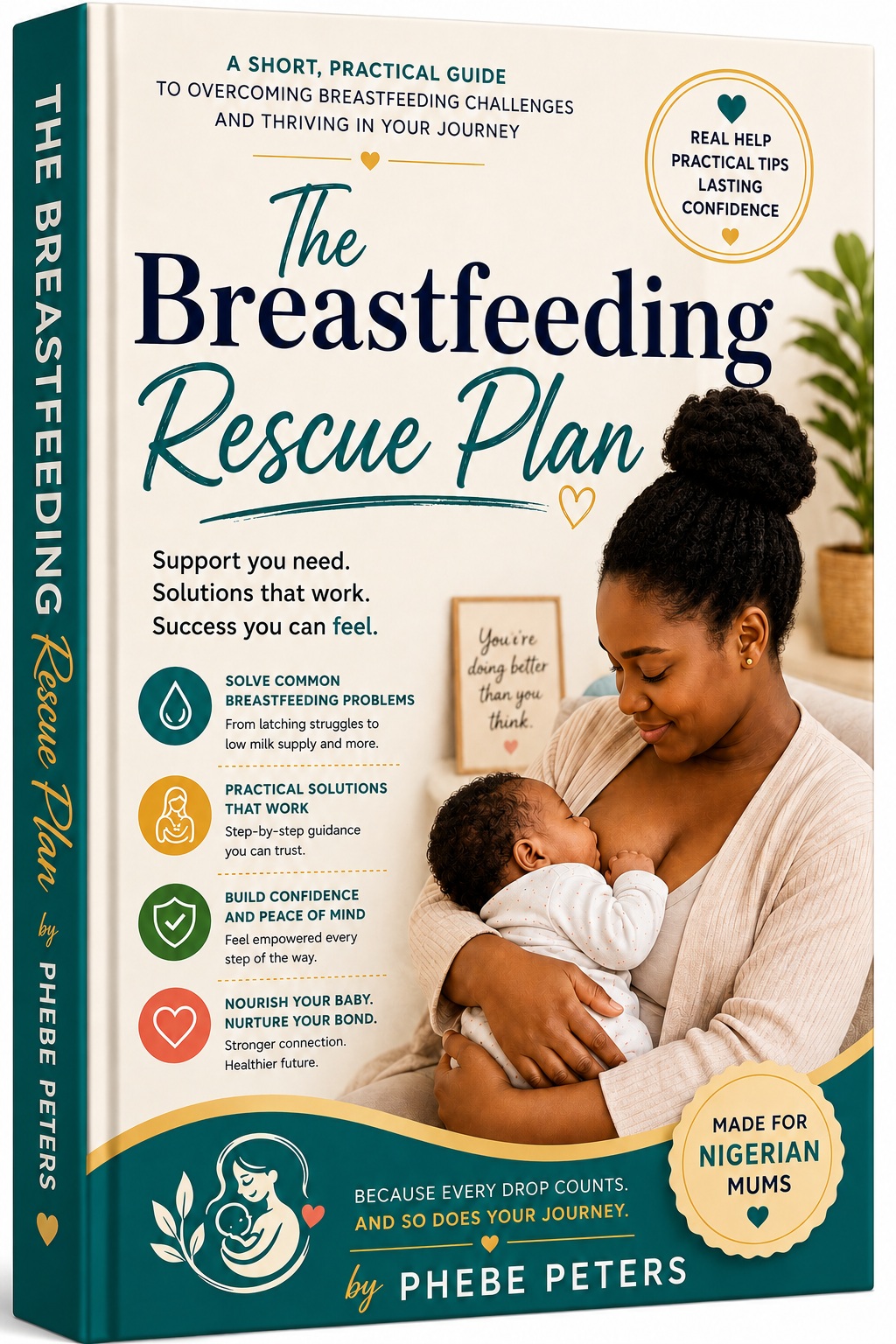
A dedicated, print-ready emergency reference card designed for the hardest breastfeeding moments — when your milk drops suddenly, your baby refuses to latch, engorgement is building, or you simply do not know what to do next. Clear. Calm. Step-by-step. Built specifically for African mothers. Pin it to your wall, keep it at your feeding station, and never face a breastfeeding crisis without a plan again.
Value: ₦3,500 — Yours FREE
Total Value: ₦17,800 | You Pay Only: ₦9,800
(Main guide ₦9,800 + Meal Plan bonus ₦4,500 + Breastfeeding Rescue Plan bonus ₦3,500 = ₦17,800 total value)
⏰ First 20 buyers only receive the bonuses. Secure your spot now.
"Iron deficiency after delivery is treatable — but it cannot be treated if it is not identified. Include ugwu at least once daily, red meat or liver at least three times per week, and beans in some form at least once per day. Add crayfish to every soup as a regular condiment. Critically — eat your Vitamin C source at the same meal as your iron-rich food. Tomatoes, orange, guava, or lemon eaten alongside ugwu or beans can enhance iron absorption by up to 300%. Drink your tea or coffee between meals, never with them — the tannins in both significantly reduce iron absorption."
— After The Baby: Bleed, Heal, Flow, Section 8: Your 6-Week African Postpartum Meal Plan"Before there were pharmaceutical antiseptics and clinical wound care protocols, African grandmothers knew something that modern medicine has since validated through research: warm water heals the perineum. A sitz bath increases blood circulation to the perineal tissues, reduces swelling and inflammation, provides significant pain relief, and keeps the wound clean. Your grandmothers did not call it a sitz bath. They simply told you to sit in warm water. The principle is the same — and the evidence behind it is now well-established."
— After The Baby: Bleed, Heal, Flow, Section 6: Physical Recovery Protocol"A caesarean section is major abdominal surgery — involving incision through seven layers of tissue. Complete internal healing takes approximately 6 months. This is clinically important because the absence of external wound pain does not mean internal healing is complete. A mother who is back on her feet and managing the household at two weeks postpartum may look recovered. Internally, she is still in the early stages of healing. Give your body what it actually needs — not what the culture around you expects."
— After The Baby: Bleed, Heal, Flow, Section 6: Physical Recovery Protocol"Every time you visit a doctor, clinic, pharmacy, or any healthcare facility during your breastfeeding period — for any reason — begin the encounter with this statement: 'I am currently breastfeeding a [age of baby] old baby.' Say it before any medication is prescribed. Say it before any injection is given. This single statement activates a different clinical decision-making framework. Do not assume they will ask. Tell them proactively, every time, without exception."
— After The Baby: Bleed, Heal, Flow, Section 9: Medication Safety During Breastfeeding"In postpartum recovery, the threshold for seeking professional help should be lower than you think — not higher. The cost of going to the doctor unnecessarily is time and money. The cost of not going when you should have is potentially your life, your health, your mental wellbeing, or your relationship with your baby. When in doubt — go."
— After The Baby: Bleed, Heal, Flow, Section 15: When To Seek Professional HelpThis discounted offer with bonuses is available for the first 20 buyers only.
Once those spots are gone, the price returns to its standard rate and the bonuses are removed.
You are not the only one viewing this page right now.
Every minute you wait is a minute another mother could be claiming your spot.
🚨 YES! I Want My Copy — Secure My Spot NowStill feeling unsure? I completely understand. You have been disappointed before. You have tried things that didn't work. The last thing I want is for you to spend money on something and feel like it failed you.
Use this guide for 30 full days. Follow the protocols. Try the meal plan. Implement the breastfeeding system. Use the emotional tools.
If after 30 days you have seen zero improvement in your recovery, your breastfeeding, your energy, or your emotional state — I will refund every single naira, cedi, CFA franc, or dollar you paid. No questions. No stress. No awkward conversation.
You keep the guide. You keep the bonuses. And you pay nothing.
That is how confident I am that this will work for you.
✅ Get My Copy — 30-Day Money Back GuaranteeYou have two options in front of you right now. Only two.
✅ Option 1: You take action today. You get After The Baby: Bleed, Heal, Flow — the complete postpartum recovery system built specifically for African mothers. You start tonight. You follow the protocols. You eat from the meal plan. And in 8 days — not 8 weeks, not 8 months — you begin to feel the difference. Your milk flows. Your body heals. Your energy returns. Your husband looks at you and says what Emmanuel said to Glory: "You look like you again." And you carry this knowledge forward — for your next pregnancy, for your sister, for your daughter when her time comes.
❌ Option 2: You close this page. You go back to the YouTube tutorials that haven't worked. Back to the pap that hasn't been enough on its own. Back to the Facebook group that gave you opinions but no real answers. Back to suffering quietly in a society that expects you to be strong. Back to the 2am Googling that terrifies you more than it helps. Maybe it will get better on its own. Maybe. Or maybe — like Glory before that family gathering — you just keep waiting for something to change while doing the same things that haven't worked.
Maybe God wanted you to see this page today.
The clock is ticking.
🔒 100% Secure Payment | Instant Download | 30-Day Money Back Guarantee
⚠️ Bonuses available for the first 20 buyers only.
© 2026 Healthy Moms Gist with Phaybay | Straight talk on postpartum health from someone people already ask
This guide is an educational resource and is not a substitute for professional medical advice. Always consult your doctor or qualified healthcare provider regarding your specific medical situation.